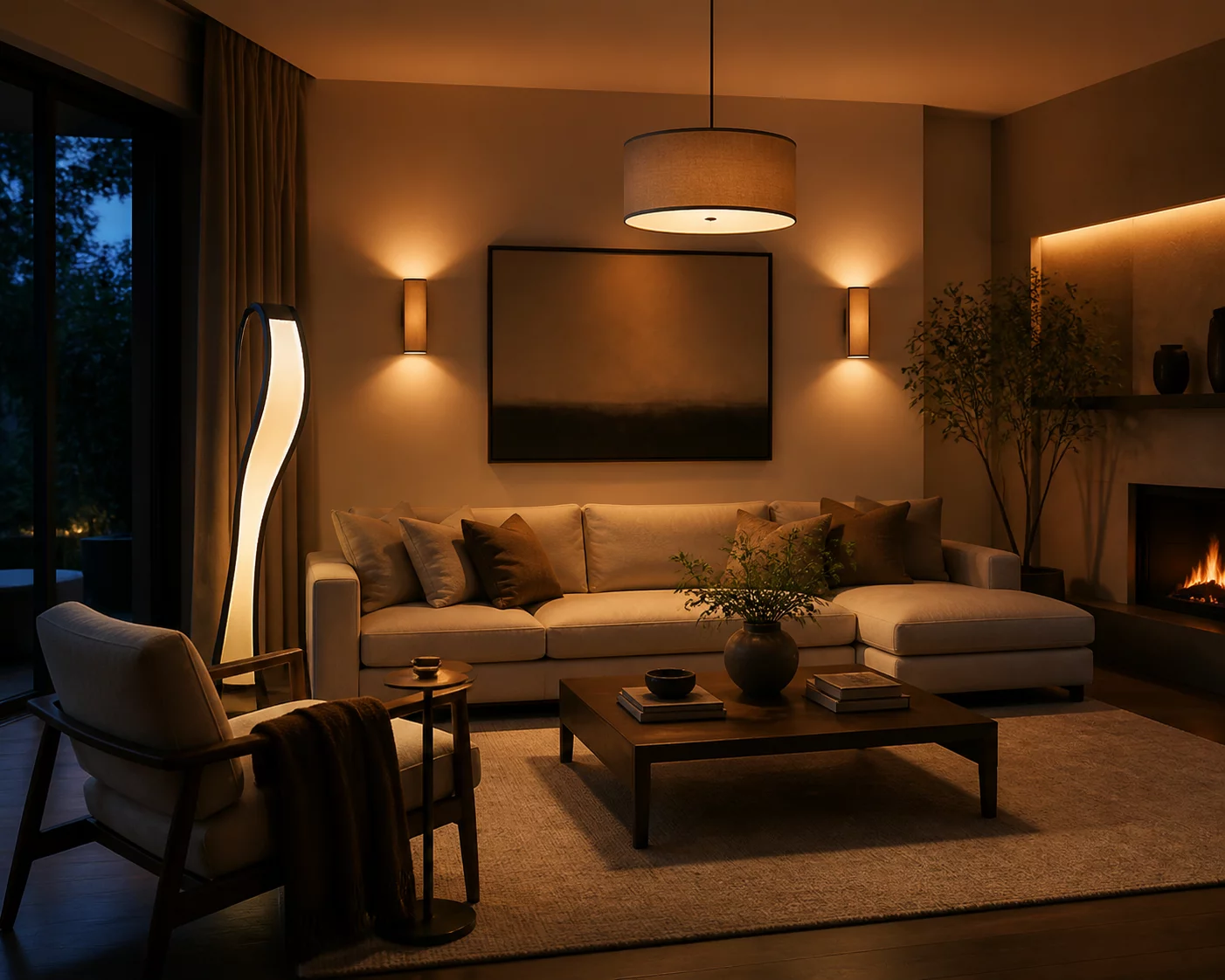
Lighting does more than merely dispel shadows; it defines architectural volume, enhances natural textures, and dictates the emotional cadence of every room. Understanding fundamental lighting design principles allows you to sculpt living environments that transition effortlessly from invigorating daylight hours to tranquil evening retreats.
The Triad of Layered Illumination: Ambient, Task, and Accent
A single ceiling fixture inevitably flattens architectural depth and creates harsh, unflattering contrast. Successful interiors rely on a coordinated trio of illumination sources. Ambient light provides the base level of overall brightness, softly washing surfaces through recessed cans or diffused ceiling pendants. Task lighting concentrates focused luminescence where functional clarity is indispensable, such as reading lamps by an armchair or under-cabinet LED strips along kitchen countertops. Accent lighting directs visual attention toward curated centerpieces, using adjustable spotlights or glowing wall sconces to highlight artwork, architectural niches, and rich wood finishes.
Light is not merely an accessory you turn on after sunset; it is the fundamental medium through which we perceive form, texture, and emotional comfort.
— James Taylor, Interior Architecture Contributor
Navigating Color Temperatures and Fixture Placement
Achieving atmospheric balance requires careful control over color temperature, measured in Kelvins. Warm white tones (2700K to 3000K) evoke relaxation and warmth, making them ideal for living rooms, bedrooms, and dining areas. Neutral or cool white tones (3500K to 4000K) invigorate work zones, laundry areas, and home offices. Furthermore, fixture scale and mounting heights must reflect spatial proportions: suspend dining pendants roughly thirty to thirty-six inches above the table surface, and mount eye-level wall sconces between sixty and sixty-six inches from the finished floor to prevent direct glare.
Core Principles for Balanced Home Illumination
- Establish distinct lighting layers across floor, eye, and ceiling levels to eliminate harsh shadows.
- Incorporate dimmer controls on primary circuits to adjust ambiance based on time and activity.
- Align Kelvin ratings consistently within shared sightlines to avoid visual discord.
Integrating dimmers and smart lighting scenes unlocks dynamic flexibility within everyday spaces. When daylight wanes, dimming primary ambient circuits while leaving low-wattage accent lamps illuminated softens room perimeters, fostering immediate coziness. By treating light as a sculptural element woven into your furniture layout, your home gains remarkable versatility, visual comfort, and timeless sophistication.
Discussion & Opinions
0 CommentsNo comments yet. Be the first to share your thoughts on lighting design!