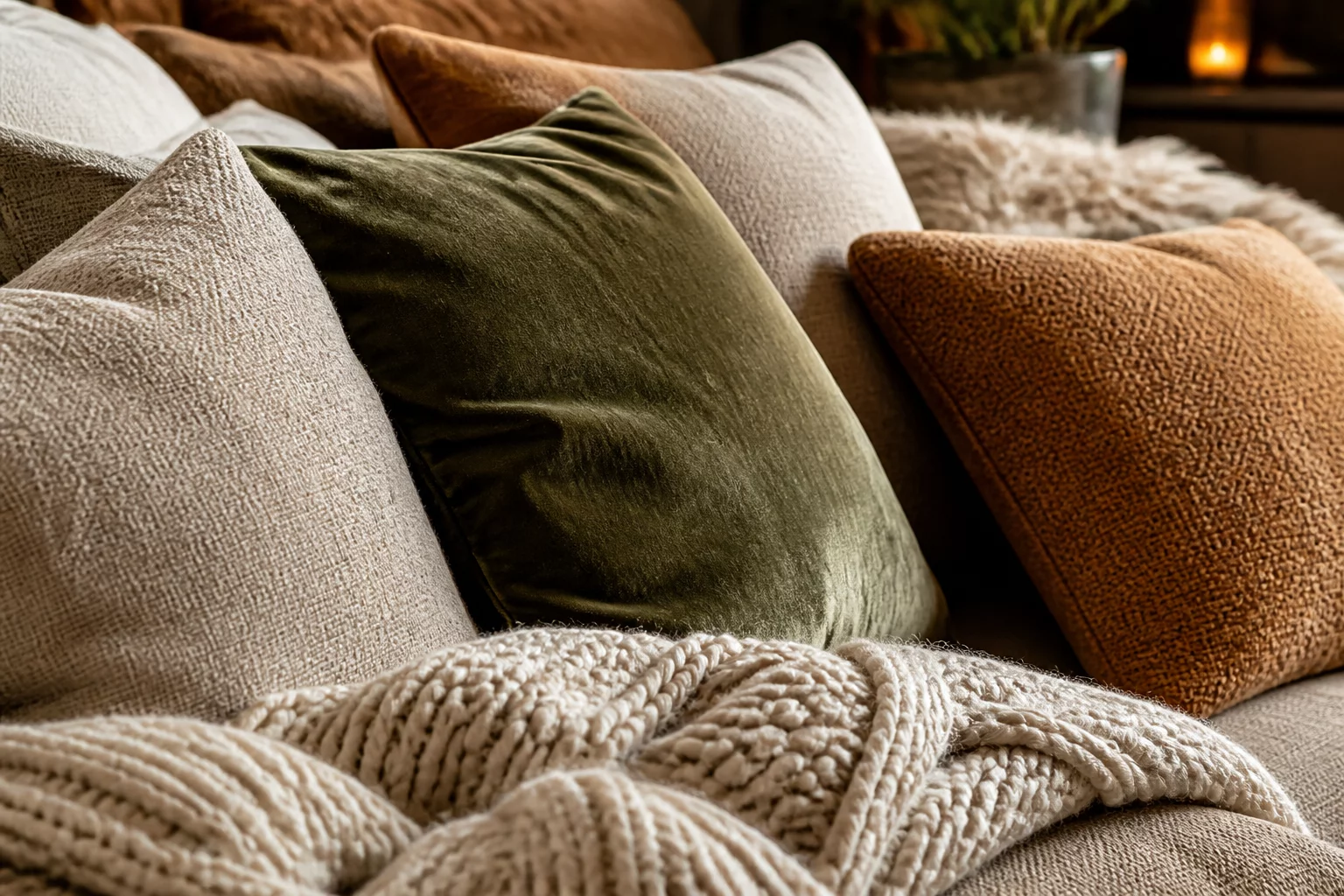
Texture is the silent storyteller in interior design. When color palettes remain calm and understated, tactile variety takes center stage, turning what could feel like a flat room into an inviting, multi-dimensional sanctuary.
The Rule of Contrasts: Smooth Meets Rough
Striking a balanced texture profile begins with intentional pairing. Pair polished surfaces like smooth marble or tempered glass with deeply tactile elements such as unvarnished oak, slubby linen, or bouclé. The visual weight of a dense velvet cushion balances effortlessly against the clean lines of a brushed metal side table, giving the eye distinct tactile stops to explore.
A room without tactile variation feels unfinished, regardless of how meticulously chosen its furniture silhouettes might be.
— Sophia Wilson, Lead Stylist
Building Layers: From Base to Accents
Successful texture mixing relies on gradual layering. Start with your primary architectural finishes like hardwood flooring or textured lime wash walls. Next, introduce grounding foundation pieces such as a flat-weave wool rug and a tailored linen sofa. Finally, weave in accent layers through ribbed ceramic vases, hammered brass hardware, and tactile knit throws.
Core Principles for Flawless Material Blending
- Limit your dominant tactile features to three foundational materials per functional zone.
- Pair warm natural woods with cool stone or slate for organic balance.
- Introduce one high-sheen or reflective accent to bounce natural light across matte fabrics.
As you introduce these materials, pay close attention to scale and sheen. Large-weave fabrics work best on expansive furniture pieces or area rugs, while tighter micro-textures suit smaller accents. Mixing matte, brushed, and satin sheens keeps the composition alive throughout shifting daylight hours.
Discussion & Opinions
1 Comment
Chloe
ReaderMixing textures has always been hard for me, this helps a lot!