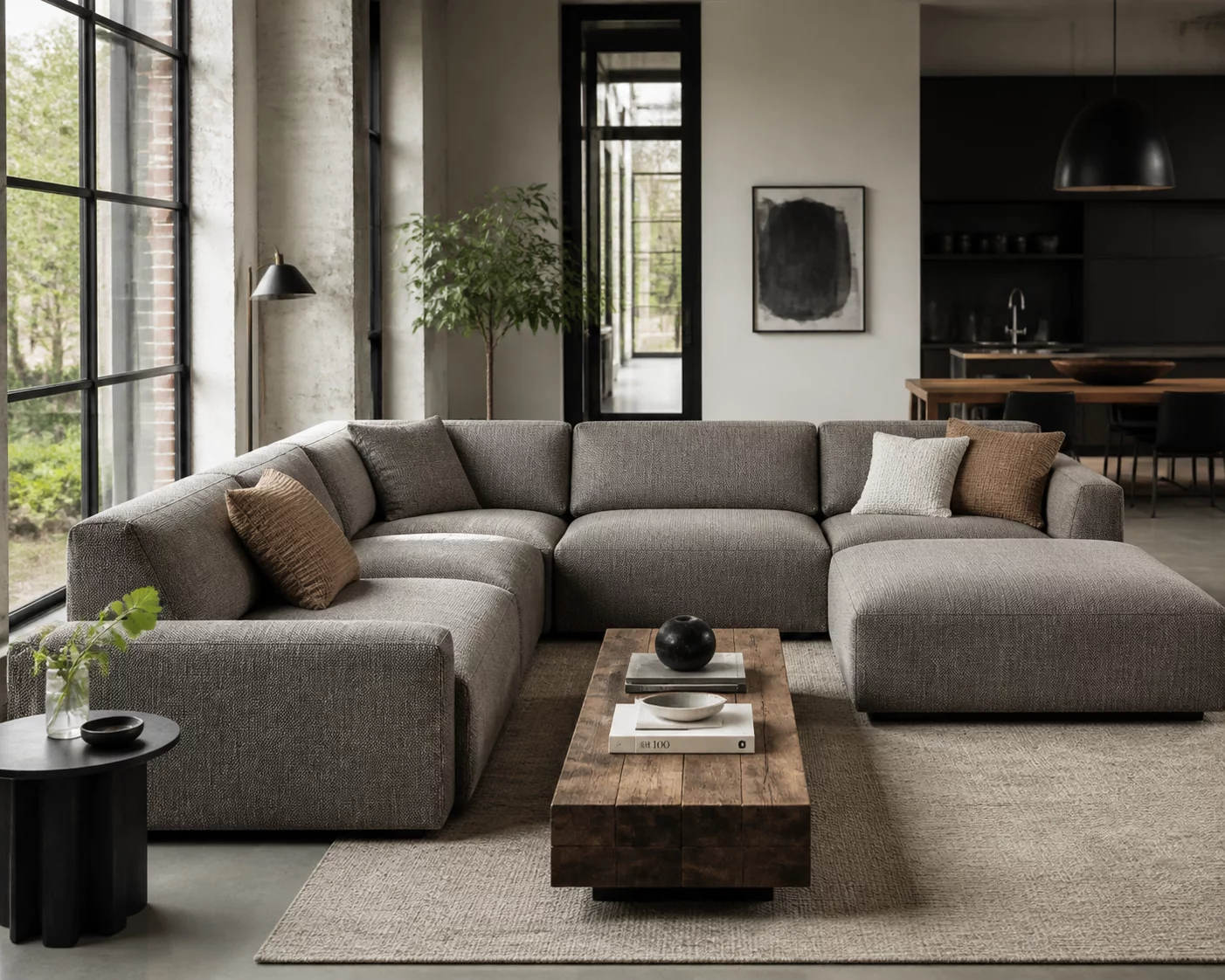
Choosing the right sofa forms the visual foundation and tactile core of your entire seating environment. Because this single furnishing handles daily lounging, social gatherings, and casual work hours, its proportions and structural composition must balance ergonomic ease with enduring craftsmanship.
Evaluating Spatial Scale and Traffic Flow
Room dimensions should always dictate the sofa silhouette rather than showroom impulse. Measure ceiling heights, window clearances, and perimeter corridors before settling on a footprint. Maintain at least thirty inches of walkway between your seating edge and adjacent tables or media credenzas, allowing natural movement without congestion.
A sofa is never merely a seating surface; it operates as the architectural anchor that defines spatial balance, lighting interaction, and daily comfort.
— James Taylor
Core Frame Craftsmanship and Cushion Fillings
The internal skeleton dictates how long your furniture preserves its original form and support. Kiln-dried hardwood frames joined with corner blocks resist warping and squeaking under heavy loads. Beneath the surface, high-density foam cores wrapped in duck down or spun polyester deliver an inviting sink-in softness while maintaining crisp tailoring over years of daily family use.
Key Checklist for Sofa Longevity
- Kiln-dried birch, beech, or oak framing with double-dowelled corner joints
- Eight-way hand-tied springs or heavy-gauge sinuous steel suspension systems
- Performance upholstery weaves rated above 30,000 double rubs for pet and stain resistance
Textile selection completes the design equation. Natural linen blends and textured bouclés offer tactile richness for formal parlors, while tight flat weaves and treated chenilles provide robust resilience in open-concept spaces with active children or pets. Test fabric samples against both natural daylight and ambient floor lamps to ensure the undertone harmonizes across seasons.
Discussion & Opinions
0 CommentsNo comments yet. This could be your first comment.