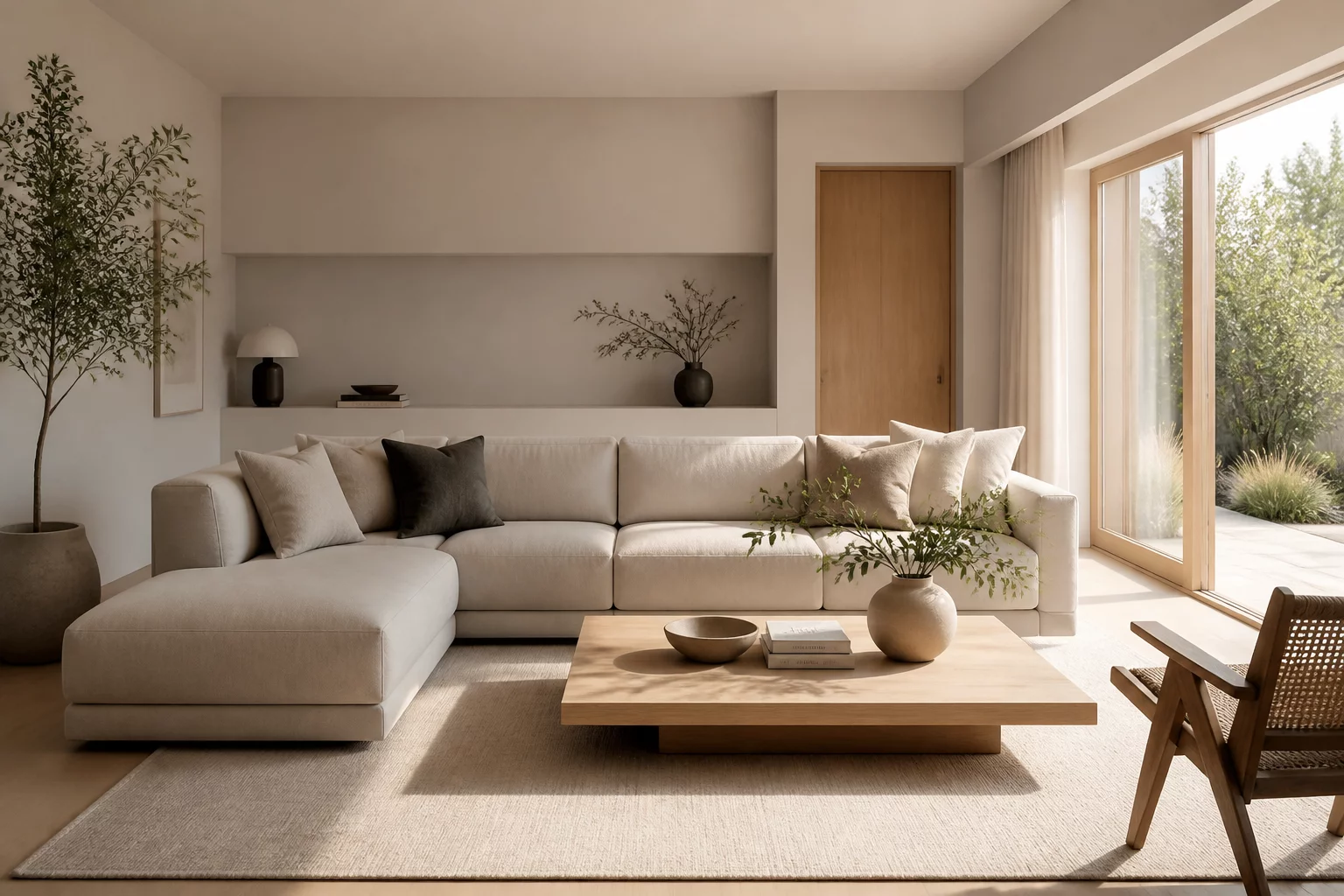
Minimalism in modern living rooms is never about sterile emptiness or depriving a home of personality. Rather, it centers around thoughtful curation—selecting timeless furniture, celebrating organic textures, and creating an effortless atmosphere where mind and body find true respite.
The Power of Purposeful Furniture Selection
When styling a minimalist living room, each piece of furniture carries significant visual weight and functional intention. A low-profile modular sofa upholstered in tactile linen grounds the room without breaking architectural sightlines. Pairing such seating with a natural oak coffee table introduces warmth, allowing the natural grain of the wood to soften linear silhouettes.
Simplicity is not about having less for the sake of less. It is about creating room for what truly brings peace and purpose into your daily life.
— Emma Carter
Balancing Materials, Light, and Proportions
Achieving harmony requires mixing contrasting textures such as looped wool, honed travertine, unpolished timber, and matte graphite metal accents. Diffused natural sunlight filtering through sheer linen curtains accentuates these finishes during the day, while directional wall sconces create a soothing evening ambiance without harsh glare.
Tactile Finishes & Muted Earth Tones
Incorporate unbleached linen, ribbed white oak, honed stone, and matte graphite elements. Layering diverse textural finishes prevents neutral milky beige and warm gray schemes from feeling flat or sterile.
Layered Warm Luminescence
Avoid harsh central downlights by opting for multi-tiered 2700K illumination. Sculptural floor lamps, dimmable cove lights, and discreet plaster wall sconces cast a warm, comforting glow across the walls.
Negative Space & Natural Circulation
Allow generous breathing room around statement furniture pieces. Unobstructed pathways encourage natural light to flow freely across the room, enhancing the perception of volume and calm.
Practical Habits for Long-Term Clutter Freedom
A truly functional minimalist space easily handles day-to-day living without falling into disarray. Floating credenzas, concealed cable management channels, and discreet built-in joinery allow everyday items to remain accessible while preserving serene visual cleanliness.
Core Principles of Minimalist Styling
- Select high-quality craftsmanship and timeless silhouettes over short-lived decor fads.
- Build around an organic color scheme of milky whites, warm grays, sand beige, and graphite accents.
- Integrate seamless concealed storage within modular seating and credenzas to sustain visual tranquility.
Reader Reflections
2 ThoughtsJohn Doe
Design EnthusiastGreat minimalist ideas! I love the neutral tones.
Share Your Perspective